For years, Final Year Projects (FYP) in Pakistani universities fell into two separate camps: Computer Science students built cloud-hosted web dashboards, while Electrical Engineering students wired basic sensors to microcontrollers. In 2026–2027, university viva panels and industrial evaluators are rejecting this divide. Evaluators want to see Edge AI — machine learning models running directly on local embedded hardware without relying on continuous internet access, high latency, or costly cloud APIs.
If you are planning your Final Year Project or hardware prototype in Pakistan, here is how you can merge Artificial Intelligence with Embedded Systems to build a viva-winning project.
What is Embedded AI (Edge AI / TinyML)?
Embedded AI refers to running trained machine learning and deep learning inference directly on edge devices — ranging from 32-bit microcontrollers like the ESP32 to single-board computers like the Raspberry Pi and NVIDIA Jetson.
| Evaluation Criteria | Cloud-Based AI | Embedded Edge AI (Recommended) |
|---|---|---|
| Inference Latency | High (150ms – 2000ms over Wi-Fi) | <20ms local processing |
| Internet Dependency | 100% required (Fails if Wi-Fi drops) | Zero internet required (Offline inference) |
| Hardware BOM Cost | Expensive recurring cloud subscriptions | Affordable hardware (ESP32-CAM, Pi Pico) |
| University Viva Impression | "Just an API call to OpenAI/Google" | "True engineering: Local ML inferencing" |
| Data Privacy & Security | Video/audio streamed to cloud servers | 100% on-device private processing |
The Best Embedded AI Hardware Platforms in Pakistan
Depending on your model complexity, you have three primary hardware tiers available locally:
1. Ultra-Low-Power Microcontrollers (TinyML)
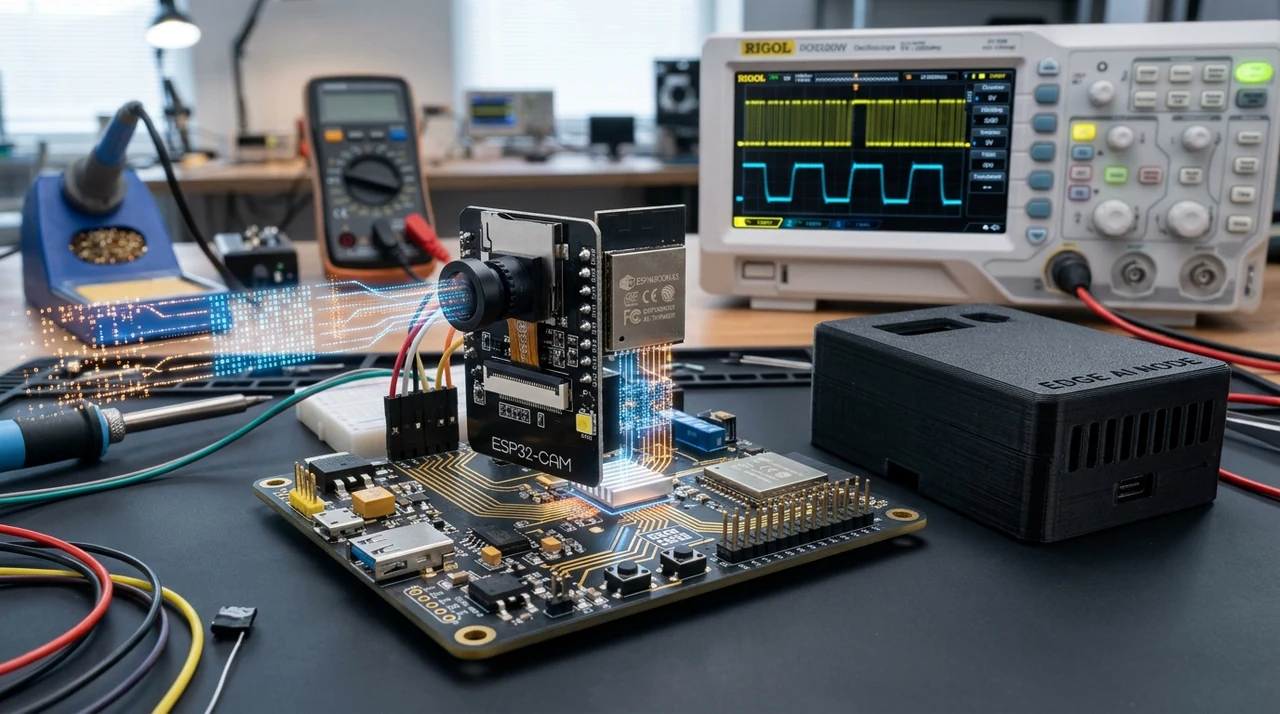
- ESP32 & ESP32-CAM: Powered by dual-core Xtensa LX6/LX7 processors with vector instructions. Capable of running quantized TensorFlow Lite Micro (TFLite) models for face recognition, sound classification, and lightweight computer vision.
- Raspberry Pi Pico (RP2040 / RP2350): Excellent for sensor anomaly detection, voice keyword spotting, and gesture recognition via IMU/accelerometers.
2. Single-Board Linux Computers (Edge Computer Vision)
- Raspberry Pi 4 / 5: Runs standard OpenCV, YOLOv8-nano, and MediaPipe models at 10–25 FPS for multi-object tracking and robotic navigation.
- NVIDIA Jetson Nano / Orin Nano: Dedicated CUDA cores and TensorRT acceleration for multi-camera video analytics and industrial robotics.
Top 5 Practical Embedded AI FYP Ideas for Pakistani Students
1. IoT & AI-Powered Real-Time Waste Classification System
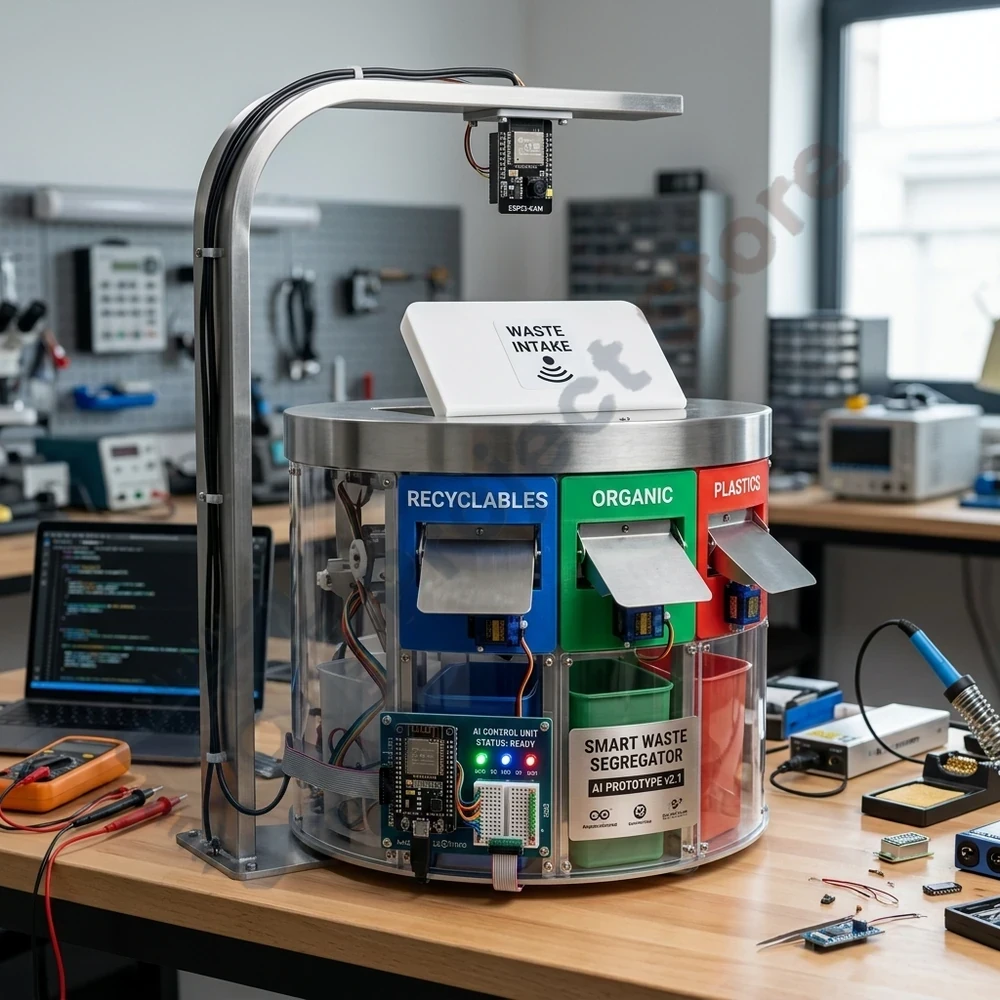
How it works: An ESP32-CAM captures high-resolution imagery of waste items placed on an intake tray. An onboard or edge-hosted TensorFlow model classifies the item (Organic, Plastic, Recyclable, Electronic) in under 50 milliseconds and triggers a servo-driven mechanical baffle to route the trash into the proper bin.
Get the Turnkey Kit: Order the complete IoT AI Waste Segregation FYP Kit with source code & report →
2. Embedded TinyML Industrial Anomaly & Vibration Detection
How it works: A 3-axis accelerometer (ADXL345 / MPU-6050) captures high-frequency motor vibrations on an industrial spindle. An ESP32 running an autoencoder model detects bearing wear and machine failure before physical breakdown occurs — high commercial value for Pakistani manufacturing plants.
3. Driver Drowsiness & Fatigue Warning System
How it works: An IR-illuminated camera tracks eye aspect ratio (EAR) and mouth yawn frequency in dark vehicle cabins, triggering an immediate buzzer and steering haptic alert.
4. Vision-Guided Obstacle Avoidance Mobile Robot
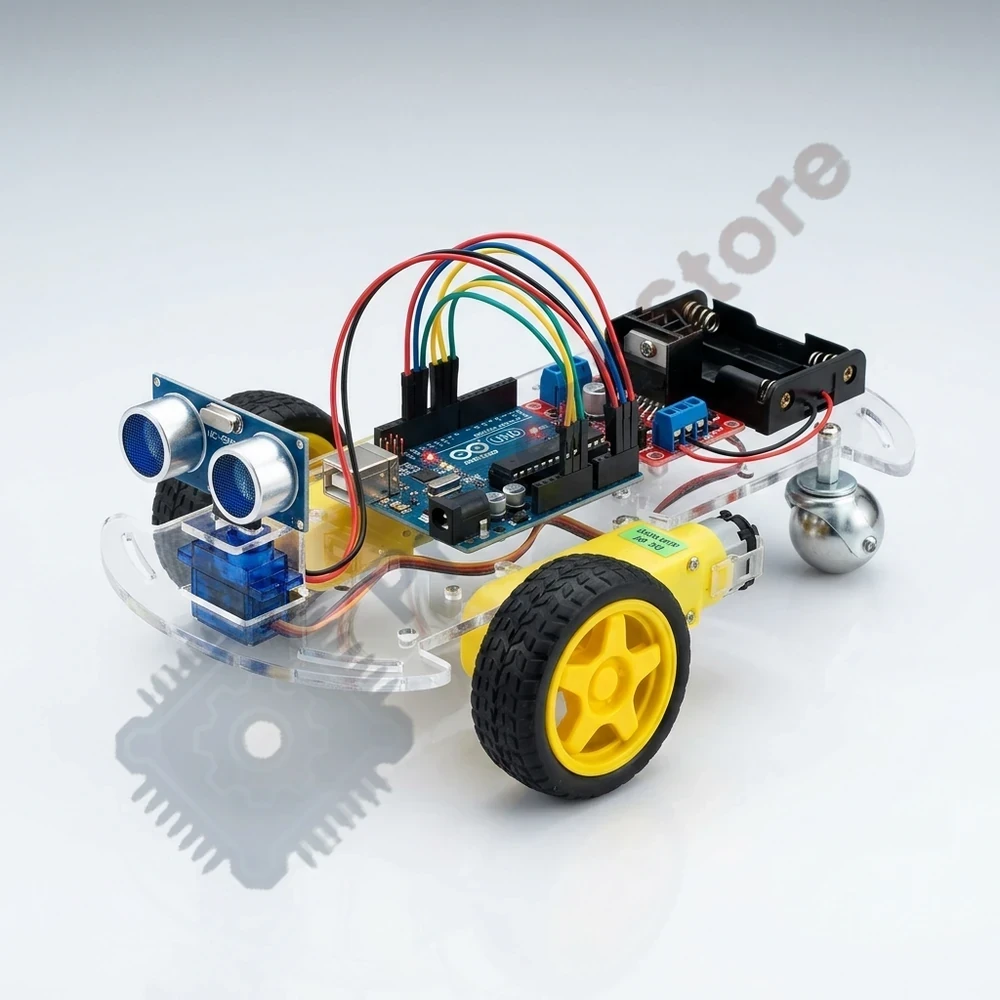
How it works: Combines ultrasonic rangefinding with edge computer vision to steer autonomous rovers around complex obstacles. Explore the Smart 2WD Obstacle Avoiding Robot Kit →
5. Smart Agriculture Edge Vision Plant Disease Detector
How it works: A handheld camera scans cotton, wheat, or tomato leaves in rural fields where 4G cellular coverage is unavailable. The local neural network identifies rust, blight, or pests offline.
3 Critical Mistakes That Fail Embedded AI Projects (And How to Avoid Them)
- Power Supply Starvation (Camera Brownouts): Running an ESP32-CAM directly off a weak USB port causes instant voltage drops when the camera sensor triggers, causing brownout resets. Always use an independent 5V/3A buck converter or dedicated Li-Ion battery pack.
- Messy Breadboards in the Viva Room: Examiners penalize loose jumper wires. Use a custom 2-layer PCB fabrication service to mount your microcontroller, drivers, and connectors securely.
- Fragile Cardboard Enclosures: Mount camera lenses and sensors at precise angles using custom 3D-printed snap-fit enclosures designed to withstand transport and demonstration.
Get Complete Embedded AI Hardware & Turnkey FYP Support
At ProjectStore.pk, we don't just supply electronic components — our engineering team in Lahore actively builds and tests AI-embedded hardware prototypes.
- Need verified hardware & pre-flashed code? Contact our lab team via WhatsApp (+92 310 4505008).
- Need rapid prototyping in Lahore or nationwide? Order your custom 3D Printed Enclosures and Custom PCBs with nationwide Cash on Delivery.